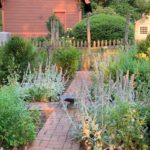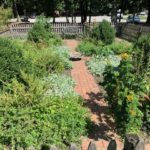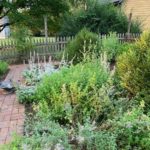
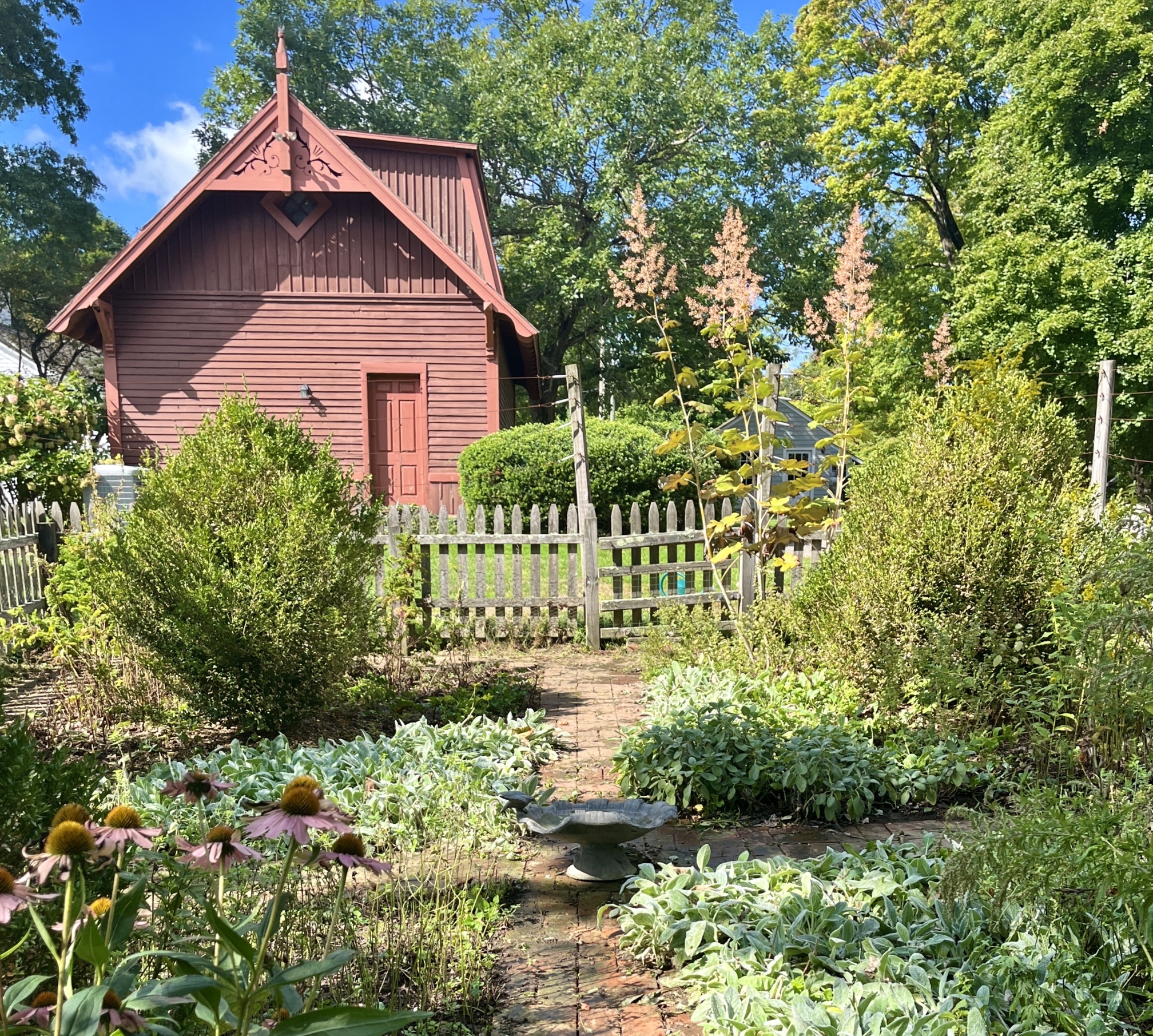
Since 1981, the New Canaan Garden Club (NCGC) has maintained the Colonial Herb Garden at the New Canaan Museum & Historical Society. Designed as an educational space, the Herb Garden is used by museum docents to teach visiting students, about the vital role plants and herbs played in the daily life in the colonies. The garden is open to the public for self-guided exploration.
During the 17th and 18th centuries, herbs were essential to both the daily life and survival of colonial settlers. They were not only valued for flavoring food but also for their healing properties, household uses, and roles in personal care. Grown, harvested, preserved, dried, and stored with care, these plants were indispensable in a time without refrigeration or modern sanitation. As medicines, they were often the only remedies available to early settlers, making them truly essential in early colonial life. Herbs were used to disinfect homes, flavor and preserve food, treat illness and injury, and even used to create natural dyes to bring color into daily life.
The garden is planted in four distinct planting quadrants and are mostly organized by use: culinary, medicinal, home, fragrance and dye purposes. Many herbs and plants had multiple uses. The layout reflects historical practice but also made it easier for colonial gardeners to tend the beds and reach each plant.
Planting Quadrants 1 & 2 – Culinary Herbs
These planting beds feature herbs that were used for cooking, preserving meat, and brewing teas. Without refrigeration, colonists relied on herbs for safe food storage and flavor year-round. Many of the herbs planted here – such as parsley, rosemary, oregano, sage, and mint – remain staples in the modern kitchen. Lesser-known colonial herbs include:
- Borage, which added a cucumber-like flavor to salads and cheeses and was used medicinally for fevers and respiratory infections.
- Chamomile, brewed into calming teas.
- Lemon balm, popular in beverages and tonics.
Planting Quadrant 3 – Medicinal Herbs and Plants
Known as the “colonial pharmacy,” this quadrant contains herbs and plants used to treat common ailments.
- Lamb’s Ears (Stachys byzantina) were used in teas and poultices to treat diarrhea, asthma, and neuralgia, and the leaves served as bandages.
- Lavender, Echinacea, and Yarrow helped alleviate fevers, wounds and digestive issues
- Comfrey (Symphytum officinale) was used to treat wounds, bruises and broken bones.
Planting Quadrant 4 – Household, Fragrance and Dye Plants
This planting bed showcases herbs and plants used around the house – for scent, pest control and fabric dyeing.
- Tansy (Tanacetum vulgare) repelled fleas and insects and produced yellow and green dyes. Medicinally, Tansy it was used to treat roundworm and scabies.
- Scented geraniums were used in sachets for their fresh scent.
- Rhubarb roots yielded a vibrant golden dye; the leaves were used to polish pots and pans.
- Catnip (Nepeta cataria) was planted around the house to deter mosquitos, rats and mice, and its dried leaves were added to potpourri.
Throughout the growing season, NCGC members weed, water and maintain the garden. The garden has evolved over time – it was redesigned in 2011-2012, new herbs were added in 2014-2015, and the brick pathways were added in 2018. In 2024, the surrounding fence was replaced, and overgrown herbs were thinned, lost plants were reintroduced, and new herbs were planted. Plant labels that include the uses of the various herbs have been added to enhance one’s visit to the garden. Future plans include extending a brick walkway to connect the Herb Garden to the rest of the Museum campus and installing a new educational sign to enrich the visitor experience.